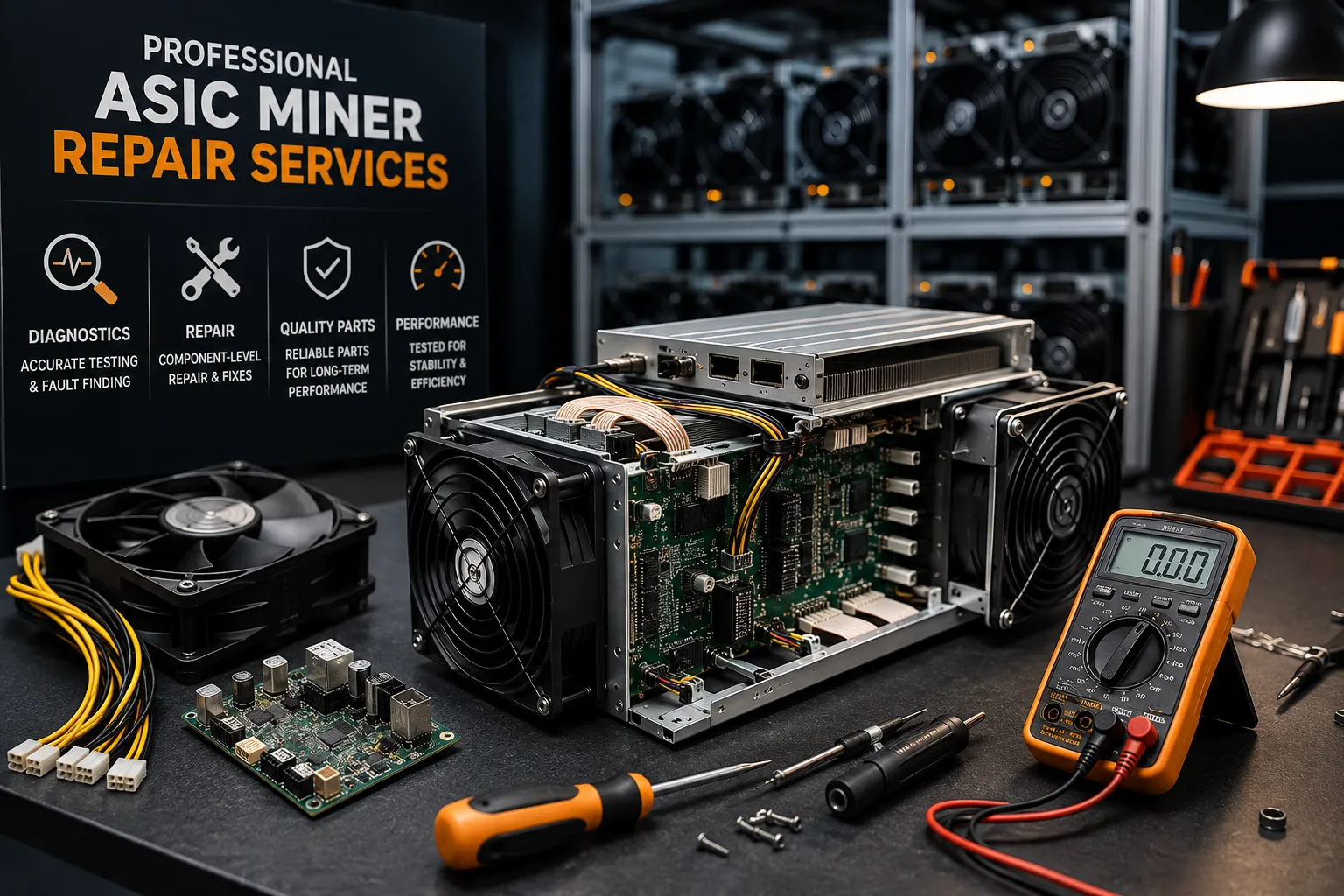
Professional ASIC Miner Repair Services: Keep Your Mining Hardware Running Smoothly

Professional ASIC Miner Repair Services: Keep Your Mining Hardware Running Smoothly
ASIC miners are built for high-performance cryptocurrency mining, but even the strongest mining machines need proper care, maintenance, and repair support. Because ASIC miners run continuously for long hours, they are exposed to heat, dust, vibration, electrical load, fan pressure, and component wear. Over time, these conditions can affect performance and create technical issues that reduce mining efficiency.
For serious miners, hardware downtime is not just a technical problem. It can directly affect productivity, revenue potential, and long-term equipment value. This is why professional ASIC miner repair services are essential for anyone who wants to keep mining hardware operating reliably.
Whether you manage a small mining setup or a large mining farm, proper diagnostics, maintenance, and repair support can help protect your investment and reduce costly interruptions.
Why ASIC Miner Repair Services Matter
ASIC mining hardware works under constant pressure. Unlike normal computers that are used for a few hours a day, ASIC miners are usually expected to run 24/7. This continuous operation places heavy stress on internal components.
When a miner starts showing problems, many users ignore the warning signs until the machine stops working completely. This can lead to bigger repair costs and longer downtime.
Professional repair services help identify issues early and solve them before they turn into serious failures. A trained repair process can restore performance, improve stability, and extend the lifespan of your mining hardware.
Common ASIC Miner Problems
ASIC miners can face different types of technical issues depending on the model, environment, usage, and maintenance history. Some problems are small and easy to fix, while others require advanced diagnostics and component-level repair.
1. Hash Board Failure
The hash board is one of the most important parts of an ASIC miner. It contains the chips responsible for mining calculations. If one or more hash boards fail, the miner may lose hash rate, show errors, or stop mining properly.
Common signs of hash board issues include:
- Missing hash board detection
- Low hash rate
- Chip errors
- Miner instability
- Frequent restarts
- Abnormal temperature readings
Hash board repair often requires technical testing, chip inspection, and professional tools.
2. Fan Problems
Cooling fans are essential for air-cooled ASIC miners. If fans stop working or run poorly, the miner can overheat quickly. Fan failure can also create loud noise, unstable airflow, or emergency shutdowns.
Signs of fan problems include:
- Loud or unusual fan noise
- Fan speed errors
- Overheating
- Miner shutdowns
- Poor airflow
- Physical fan damage
Replacing or repairing faulty fans is important to keep the miner safe and stable.
3. Power Supply Issues
The power supply unit provides the energy required to run the miner. If the power supply is weak, damaged, or unstable, the miner may fail to start or may shut down unexpectedly.
Common power-related issues include:
- Miner not powering on
- Sudden shutdowns
- Burning smell
- Power instability
- Voltage errors
- Overheating power supply
Power problems should always be handled carefully because incorrect handling can damage the miner or create safety risks.
4. Overheating
Overheating is one of the most common issues in mining operations. It can be caused by dust buildup, poor ventilation, weak fans, blocked airflow, high room temperature, or cooling system failure.
Overheating can lead to:
- Lower performance
- Hardware errors
- Component damage
- Reduced miner lifespan
- Increased maintenance cost
- Unexpected downtime
Proper cleaning, cooling upgrades, and thermal inspection can help prevent heat-related problems.
5. Control Board Problems
The control board manages the miner’s operation, firmware, network connection, and communication with hash boards. If the control board fails, the miner may not boot, connect, or operate correctly.
Signs of control board issues include:
- Miner not starting
- Network connection failure
- Firmware errors
- Hash boards not detected
- Dashboard not loading
- Repeated boot loops
Control board repair or replacement should be done with proper compatibility checks.
6. Firmware and Software Issues
Sometimes the problem is not hardware-related. Incorrect firmware, failed updates, configuration errors, or corrupted settings can affect miner operation.
Firmware-related issues may cause:
- Miner not connecting to pool
- Unstable hash rate
- Failed booting
- Incorrect temperature readings
- Repeated resets
- Dashboard errors
Professional diagnostics can help identify whether the issue is software-based or hardware-based.
Why DIY Repair Can Be Risky
Many miners try to repair ASIC hardware themselves to save money. While basic cleaning and fan replacement may be manageable for some users, advanced repairs can be risky without experience.
ASIC miners include sensitive electronic components. Incorrect handling can make the problem worse. For example, using the wrong replacement parts, applying too much heat during soldering, or installing incompatible firmware can cause permanent damage.
DIY repair can also lead to:
- Further hardware damage
- Lost warranty options
- Incorrect diagnosis
- Safety risks
- More expensive repairs later
- Longer downtime
Professional repair support helps reduce these risks by using proper tools, testing methods, and technical knowledge.
Benefits of Professional ASIC Miner Repair
1. Accurate Diagnostics
The first step in any repair process is proper diagnosis. Without accurate testing, it is easy to replace the wrong part or miss the real issue.
Professional diagnostics help identify whether the problem is related to the hash board, power supply, fans, control board, firmware, cooling system, or another component.
2. Faster Problem Resolution
Experienced repair technicians understand common miner issues and know how to test them efficiently. This can reduce the time needed to bring the miner back into operation.
For mining businesses, faster repairs mean less downtime and fewer missed mining opportunities.
3. Component-Level Repair
Some miner problems require more than basic part replacement. Component-level repair may involve testing chips, circuits, connectors, sensors, and other internal parts.
This level of repair requires specialized tools and knowledge.
4. Better Long-Term Reliability
A professional repair process does not only fix the immediate issue. It can also identify related problems that may affect the miner later.
For example, a miner with overheating issues may also need cleaning, fan replacement, airflow improvement, or thermal inspection.
5. Protection of Hardware Investment
ASIC miners can be expensive. Proper repair and maintenance help protect that investment by extending the useful life of the machine.
Instead of replacing hardware too quickly, professional repair can restore function and improve operational value.
Preventive Maintenance for ASIC Miners
Repair is important, but prevention is even better. Regular maintenance can reduce the chances of serious hardware failure.
Here are some useful maintenance tips:
Keep the Miner Clean
Dust buildup blocks airflow and increases heat. Regular cleaning helps fans, heat sinks, and internal components work more effectively.
Monitor Temperature
Always check miner temperature. If temperatures rise above normal levels, inspect the cooling system immediately.
Maintain Proper Airflow
Place miners in a clean, ventilated environment. Avoid blocking intake or exhaust areas.
Check Fans Regularly
Fans are one of the hardest-working parts of the miner. Replace weak or noisy fans before they fail completely.
Inspect Cables and Connectors
Loose or damaged cables can create power and communication issues. Regular inspection helps prevent sudden failures.
Use Stable Power
Power instability can damage mining hardware. Use reliable power sources and proper electrical setup.
Update Firmware Carefully
Firmware updates should be done only when needed and from trusted sources. Incorrect firmware can create major problems.
Signs Your ASIC Miner Needs Repair
You should consider professional repair support if you notice any of these signs:
- Miner is not powering on
- Hash rate suddenly drops
- Miner keeps restarting
- Fan errors appear
- Temperature is too high
- One or more hash boards are missing
- Miner cannot connect to pool
- Dashboard shows hardware errors
- Power supply makes unusual noise
- Burnt smell or visible damage
- Miner runs but produces no valid shares
- Network connection keeps failing
Ignoring these signs can lead to more serious damage.
Repair Services for Mining Farms
Large mining operations need repair services even more than individual miners. When many machines are running at the same time, even a small failure rate can create significant downtime.
Mining farms benefit from:
- Scheduled maintenance
- Bulk repair support
- Spare parts planning
- Fast diagnostics
- Cooling inspections
- Performance testing
- Repair tracking
- Priority support
A structured repair and maintenance system helps keep the operation more stable and professional.
The Role of Quality Replacement Parts
Repair quality depends heavily on the parts used. Low-quality replacement components may work temporarily but fail again quickly.
For best results, miners should use reliable replacement parts such as:
- Quality cooling fans
- Compatible power supplies
- Proper cables
- Control boards
- Hash board components
- Heat sinks
- Connectors
- Sensors
Using the right parts helps maintain miner performance and reduce repeat repairs.
How ASIC Marketplace Supports Miner Repairs
ASIC Marketplace provides professional support for miners who need repair guidance, replacement parts, and maintenance solutions. The goal is to help mining hardware owners reduce downtime, restore performance, and keep their equipment running smoothly.
Our repair service direction focuses on:
- Professional diagnostics
- Practical repair support
- Maintenance solutions
- Quality replacement parts
- Product guidance
- Support for mining hardware issues
Whether you are dealing with fan failure, overheating, hash board problems, power issues, or general miner instability, proper repair support can make a major difference.
Why Repair Is Better Than Immediate Replacement
When a miner stops working, some users immediately consider buying a new machine. In some cases, replacement may be the right choice. However, many miner issues can be repaired at a lower cost than full replacement.
Repair may be a better option when:
- The miner model is still profitable
- Only one component has failed
- Parts are available
- The machine has good overall condition
- Downtime can be minimized
- Repair cost is reasonable
A professional diagnosis can help determine whether repair or replacement is the smarter decision.
Final Thoughts
ASIC miners are powerful machines, but they require proper care to keep running efficiently. Heat, dust, fan wear, power issues, hash board problems, and firmware errors can all affect mining performance.
Professional ASIC miner repair services help protect your investment, reduce downtime, restore performance, and extend hardware life. Instead of waiting for a miner to completely fail, it is better to identify problems early and fix them properly.
For miners who want stable operations, reliable performance, and long-term hardware value, repair and maintenance are not optional. They are essential parts of a successful mining setup.
If your ASIC miner is showing signs of performance loss, overheating, fan errors, power issues, or unstable operation, professional diagnostics and repair support can help bring your mining hardware back to life.
